Home / Chapter 4
Chapter 4 of 5 · The modelWhat Kapunga taught
Decades of trading, a ruined rice farm and a failed sugar scheme taught Mahesh Patel one thing: the farmer is not the problem, the system around the farmer is. This site distils that lesson into eight practical steps for governments, businesses, lenders and development partners, each tested against what happened at Kapunga.
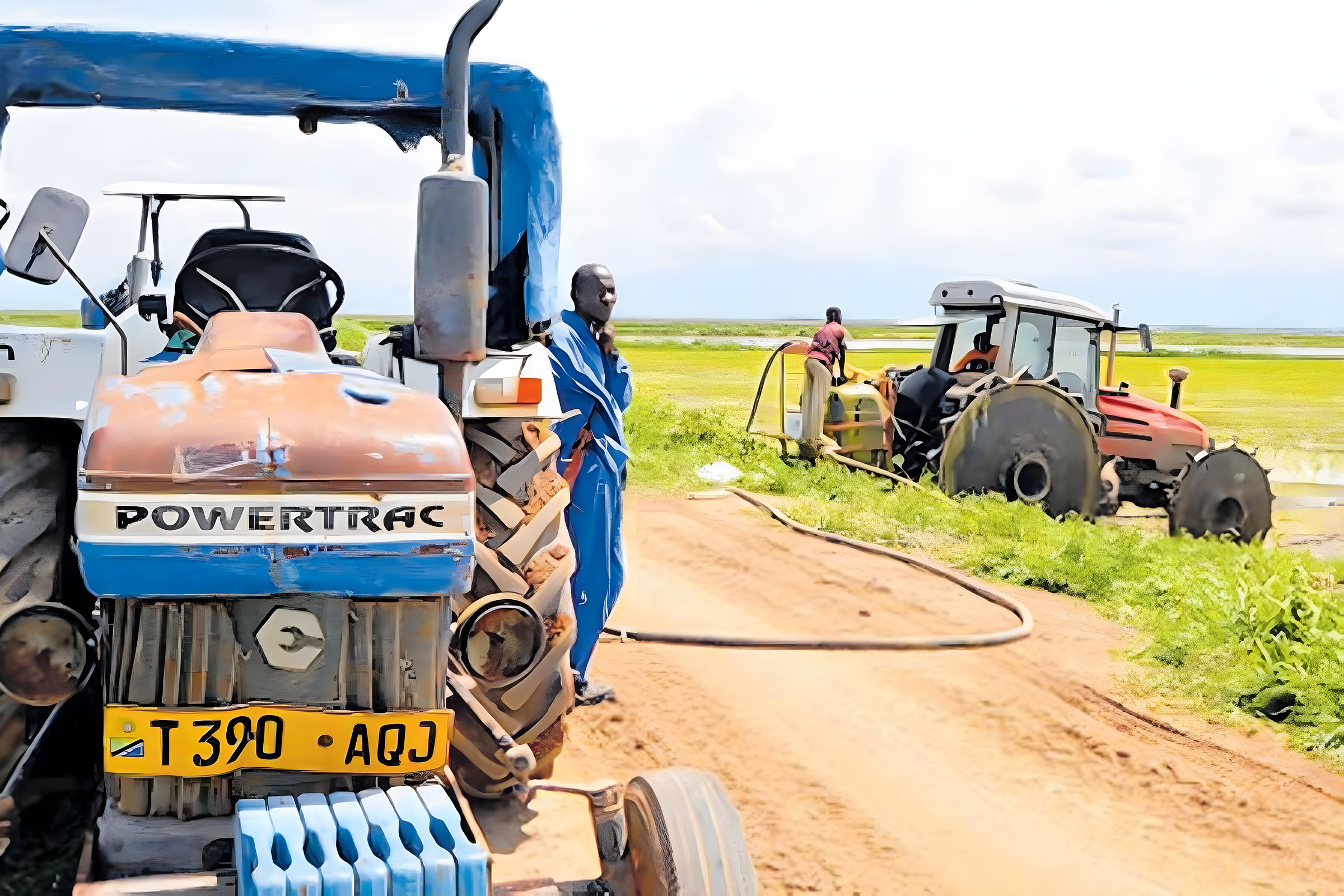
The nucleus and its outgrowers
“If you want to go fast, go alone. If you want to go far, go together.”
African proverb, quoted in Abundance, section 7.5
At the heart of Kapunga is the nucleus–outgrower scheme. A well-resourced farmer sits in the middle, the nucleus, sometimes supported by governments or development partners. It supplies the smallholders around it with improved seed, fertiliser and crop protection, and with machinery for land preparation, threshing and harvesting.
It also gives them extension support, provided by local people trained for the job, and links them to a market. That solves two problems at once: the farmer's lack of capital, and the lack of a ready buyer.
What makes it work is trust, and trust is slow. Agriculture is deeply local, he writes, and new ideas are met with caution until they have been proven on the ground, season after season. The eight steps below are what each partner has to do to earn it.
Who does what, at every step
Each step sets out the responsibility of government, business, financial institutions and development partners. The index follows you as you read.
Understand the farmer
Start with the household: land, labour, cash flow, risk and ambitions.
- Government
- Farmer registries, land records and baseline data that can be shared.
- Business
- Field surveys and conversations before designing any offer.
- Financial institutions
- Understand seasonal cash flows behind repayment capacity.
- Development partners
- Fund independent baseline studies.
Proof on the ground. At Kapunga it took years to understand smallholders' fears and insecurities before the scheme could be designed around them.
Build trust
Without trust, no input, loan or contract will be taken up.
- Government
- Resolve land questions fairly and transparently.
- Business
- Forward contracts and prices honoured season after season.
- Financial institutions
- Clear, fair terms explained in local languages.
- Development partners
- Support farmer organisations and local leadership.
Proof on the ground. At Kapunga, 2,350 hectares went back to the villagers, and forward contracts promised a buyer before the first seed was sown.
Address infrastructure
Irrigation, roads, power and storage make everything else possible.
- Government
- Invest in and maintain public irrigation and rural roads.
- Business
- Co-invest in on-farm and post-harvest assets.
- Financial institutions
- Long-tenor infrastructure lending.
- Development partners
- Blended finance that lowers early-stage risk.
Proof on the ground. At Kapunga, canals were rehabilitated and lined, weir gates now regulate the water, and roads built for the farm changed village life.
Enable productivity
Improved seed, inputs, agronomy and mechanisation, delivered together.
- Government
- Seed certification and extension services.
- Business
- Input packages, agronomists and mechanisation services.
- Financial institutions
- Input credit tied to the crop cycle.
- Development partners
- Training and demonstration plots. Seeing is believing.
Proof on the ground. At Kapunga, improved seed such as Super Saro 5, training in good agricultural practice and GPS-guided machinery arrive as one package.
Provide finance
Credit that matches how and when farmers earn.
- Government
- Enabling regulation and credit guarantee schemes.
- Business
- Contracts that serve as collateral; recovery at the point of sale.
- Financial institutions
- Seasonal products and crop insurance.
- Development partners
- First-loss capital and risk-sharing facilities.
Proof on the ground. At Kapunga, CRDB and NMB lend to thousands of farmers on terms repaid after harvest, with crop insurance, and repayment is reported at 100%.
Connect to markets
An assured buyer turns production into income.
- Government
- Predictable trade and pricing policy.
- Business
- Offtake agreements and fair, timely payment.
- Financial institutions
- Warehouse receipts and trade finance.
- Development partners
- Market information and quality standards.
Proof on the ground. At Kapunga, KRPL buys back the paddy, mills it and sells it as Kapunga Rice: 80% at home, 20% to neighbouring countries.
Create rural value addition
Milling, processing and storage close to the farm keep value in the community.
- Government
- Incentives for rural processing and power supply.
- Business
- Processing capacity and support for farmer-owned enterprises.
- Financial institutions
- Asset finance for mills and storage.
- Development partners
- Skills for young people and women entrepreneurs.
Proof on the ground. At Kapunga, farmers such as Nuhu Mdeka and Nuhu Sabai Nimrad now own their own rice mills and storage godowns.
Measure prosperity
Judge success by farmer income and community wellbeing, not tonnes alone.
- Government
- Track rural incomes and outcomes over time.
- Business
- Publish yields, participation and payments.
- Financial institutions
- Report repayment and portfolio health.
- Development partners
- Independent evaluation and shared learning.
Proof on the ground. At Kapunga, average daily income is reported up from USD 1 to USD 15, with a hospital for 18,000 people and a school for 406 pupils.
Seven services, one system
Trust-building, irrigation, an integrated nucleus–outgrower system and assured markets took Kapunga's yields from under one tonne to more than seven per hectare.
Seed without water. A loan without a buyer. Each service arrives alone, on its own timetable, and the farmer carries all of the risk.
Seven services planned together and run on commercial terms. The same farmer, on the same land, becomes an enterprise.
Select a serviceChoose any circle to see its role.
What can you take from Kapunga?
Choose your perspective. Each lesson links to the step of the model where it applies.
Coordinate institutions around the farmer
Ministries, agencies and lenders planning together instead of running parallel projects.
Step 1: Understand the farmerSettle land questions openly
Trust comes before productivity. At Kapunga, 2,350 hectares were returned to villagers.
Step 2: Build trustBuild the infrastructure first
Irrigation, roads and storage make every other investment less risky.
Step 3: Address infrastructureMake finance fit the crop cycle
Enabling policy and guarantees for credit that is repaid from the harvest.
Step 5: Provide finance
Bring patient capital
Transformation takes years; the early seasons will not pay for themselves.
Step 3: Address infrastructureBuild outgrower models that pay
Integrated value chains where the company succeeds only if its farmers do.
Step 4: Enable productivityShare risk and assure the market
Forward contracts turn uncertainty into investment.
Step 6: Connect to marketsAdd value close to the farm
Milling and storage keep income and jobs in the rural economy.
Step 7: Create rural value addition