Home / Chapter 1

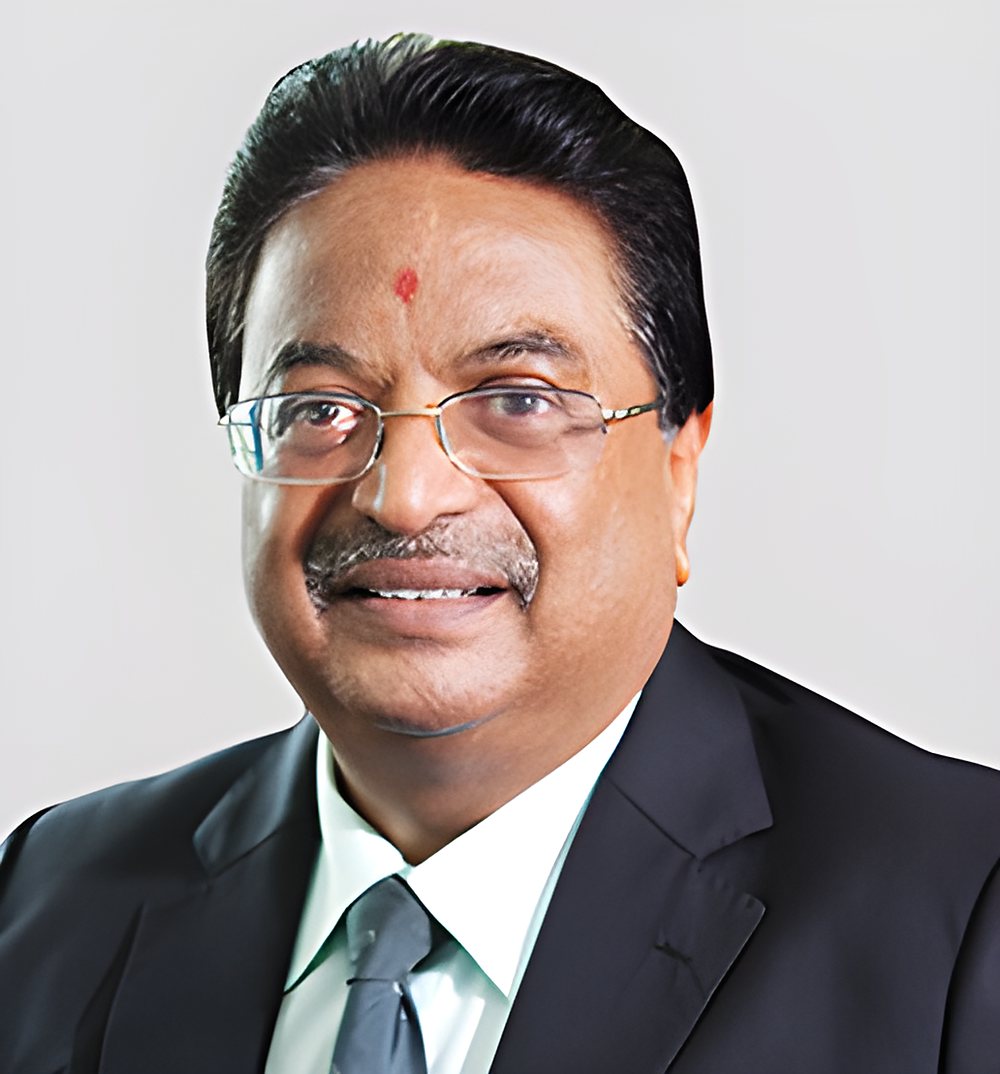
Portrait of Mahesh Patel
Mahesh Patel, founder and chairman of Export Trading Group (ETG).
Chapter 1 of 5 · 1946–1997

Born in Africa

Mahesh Patel is of Indian origin, but it was Africa that gave him a home, a livelihood and, in the end, a purpose. His story begins with a ship, a grocery store and a father who wanted to build a bridge.

“A good businessman must know his business like a hunter knows his forest.”

David Musselwhite, owner of Export Finance Company, to the young Mahesh Patel
1946Mombasa and Nairobi, Kenya

A bridge on Park Road

In 1946, Raojibhai Patel sailed to Mombasa, ferrying goods as an employee of the National Bank of India. Mombasa was already a busy port city, home to Indians, Europeans and Arabs who mostly lived apart, each in their own community.

By 1950 his tenure with the bank was over. He liked the climate and the people, so he stayed and made Kenya his home. He moved to Ngara, on the edge of Nairobi, close to the city's great wholesale markets, where handcarts doubled as mobile shops. On Park Road he opened a grocery store and named it Bridge Traders, because he wanted it to be a bridge between the Indians and the Africans.

Mahesh was born in Nairobi on 4 April 1955, the second of four children: an older sister, Prameela, and two younger brothers, Pradeep and Bharat. He helped out in his father's shop. When Kenya won its independence in 1963, his father chose to become a Kenyan citizen. Mahesh went to Park Road Primary School and City Primary School in Ngara.

1972–1980India, then across East Africa

Knowing the forest

From 1972 to 1976 he studied commerce in Gujarat, India, majoring in finance and accounting. Back in Nairobi, he took his first job at an audit firm, Mehta Patel & Company. Then, on 1 November 1978, he joined Export Finance Company (EFC), a British mercantile firm that distributed consumer goods made by multinationals.

He reported to the owner, David Musselwhite, who was born in India and had worked in Zambia and Tanzania before settling in Kenya. Mahesh took him as a role model and started to travel: Dar es Salaam in 1978; Kampala, Jinja and Tororo in Uganda in 1979, and from there Goma in Congo and Juba in Sudan; Mogadishu and Addis Ababa in 1980.

Everywhere he went there was so much to be done. People who had won their independence wanted better lives. He also watched donor programmes fail, with much of the money going on foreign experts' salaries and equipment from the donor countries.

“I found the ‘self-serving’ nature of the donor system baffling. It was like a delusion.”

Mahesh Patel, Abundance, Chapter 2
1 Aug 1982Nairobi

The day everything was taken

Musselwhite did not share his young employee's optimism. He told Mahesh there was no point staying, that the region could not be ruled without guns, and that he planned to close the company and retire to Mallorca. Mahesh negotiated to buy EFC instead. Closing it would have hurt hundreds of employees and thousands of local people who depended on its supply chains.

Then, on 1 August 1982, came an attempted coup against President Daniel arap Moi. It was put down quickly, but for a brief period armed looters roamed Nairobi. When the violence spread to the suburbs, Indians were singled out. The family saw death at close quarters. Raojibhai's shop was looted and gutted. In one day, years of work were gone, and the family was left with only the clothes they were wearing.

Mahesh faced a Hobson's choice: back out of the purchase and let EFC die, or honour the agreement and watch it struggle, probably fatally, for lack of funds. That evening, his father sat down with his three sons.

“Thugs and crooks cannot run this country. Order will return. We must not give in but bide our time, for as swiftly as the dark clouds of anarchy have overtaken our lives so shall they disperse away quickly too.”

Raojibhai Patel, August 1982

His father turned out to be right. Any doubts the sons had left were settled, Mahesh writes, by “the steely resolve in our mother's eyes.” Peace returned, but his father never went back to the shop. For Mahesh, EFC had become his destiny.

1983EFC becomes ETG

Four lessons and a new name

After taking over EFC, he renamed it Export Trading Group (ETG). Exporting outside Africa was hard, but there was good business in selling East Africa's abundant produce within the continent. He wanted to take an active part in agriculture, not just trade in it. The UN was importing food from Europe for its aid programmes, so he offered the aid agencies food grown in East Africa instead. To serve the UN World Food Programme, World Vision, the International Committee of the Red Cross and Norwegian Church Aid, ETG opened offices along the trade routes in Uganda, Ethiopia, Sudan and Somalia, and reached South Africa via Malawi.

What he had seen of failing donor projects gave him four lessons, and he built the new company on them:

  • Institutions grow like trees

    It takes five to seven years before a new institution earns the trust and respect of the society around it.

  • Leaving farming for the city is a mirage

    Migrant labourers seldom live better in the cities, while rural areas run short of labour.

  • Development must start in the community

    Agriculture is deeply local. Trust is not granted but cultivated, season after season, through proof on the ground.

  • Return to regionalism

    Big problems need big solutions. Regional cooperation and trade are fundamental to farming. Narrow national self-sufficiency goals almost always backfire.

“Barely in my mid-20s, I was in no position to impress upon the governments or invest on my own, to do what I saw was needed. However, I could reposition my own company, and that is what I did.”

Mahesh Patel, Abundance, Chapter 2

His guide was E. F. Schumacher's Small is Beautiful. He still has a quote from it framed in his office: “Economic development is something much wider and deeper than economics…”

1984Dar es Salaam and Korem, Ethiopia

Ten years at the Embassy Hotel

He was looking for three things: good agricultural land, a supportive government and a cooperative rural community. Tanzania had all three. He moved ETG from Nairobi to the Embassy Hotel in Dar es Salaam, which stayed his address for the next ten years. With a team of six, he spent most of his time in remote villages, buying small surpluses from farmers, gathering them at village level and bringing them back to the city.

“It was less a matter of business genius and more a matter of sheer hard work, done with grit and determination.”

Mahesh Patel, Abundance, Chapter 7

During the 1984 famine in Ethiopia, he travelled from Addis Ababa to Korem. “I am still haunted by the sights that accosted me,” he writes, “of a once proud people now so weakened that their eyes only blinked when relief food was being distributed.” It confirmed a belief he still holds: farmland should feed the nation first, before it grows cash crops for export.

1997Nairobi, and across Africa

Building beyond trade

In 1997 his company Technobrain opened a computer training centre in Nairobi, one of the first of its kind in sub-Saharan Africa. Young people flocked to learn. Centres followed in Tanzania and Malawi, and then across many more countries. Most of the first generation of IT professionals in Kenya and Tanzania have some connection to Technobrain.

ETG grew into a major supply-chain company. It operates in more than 40 countries, employs more than 7,000 people, and its business is connecting smallholder farmers to buyers around the world. To staff he has one favourite rallying call:

“If farmers grow, we grow.”

Mahesh Patel, Abundance, Chapter 1

He also set up the Empowering Farmers Foundation (EFF) for his philanthropy. He credits his spiritual guru, Pramukh Swami, with teaching him empathy, and it took him years, he says, to understand smallholders' fears and insecurities. By the early 2000s he wanted to prove that smallholder-driven agriculture could be profitable. A neglected state rice farm in southern Tanzania was about to come up for sale.

At a glance

The road to Kapunga

  1. 1946

    Raojibhai Patel sails to Mombasa; by 1950 he settles in Nairobi and opens Bridge Traders on Park Road.

  2. 4 April 1955

    Mahesh Patel is born in Nairobi.

  3. 1972–1976

    Studies commerce in Gujarat, India, majoring in finance and accounting.

  4. 1 Nov 1978

    Joins Export Finance Company (EFC) in Nairobi.

  5. 1 Aug 1982

    Coup attempt in Kenya; his father's shop is looted. He keeps his word and buys EFC.

  6. 1983

    EFC becomes Export Trading Group (ETG).

  7. 1984

    Witnesses the Ethiopian famine on the road to Korem.

  8. 1997

    Technobrain opens a computer training centre in Nairobi.

  9. 2003–2006

    Takes on Zanzibar's derelict sugar mill and the Kapunga rice farm in Tanzania.